
5-Axis CNC Machining
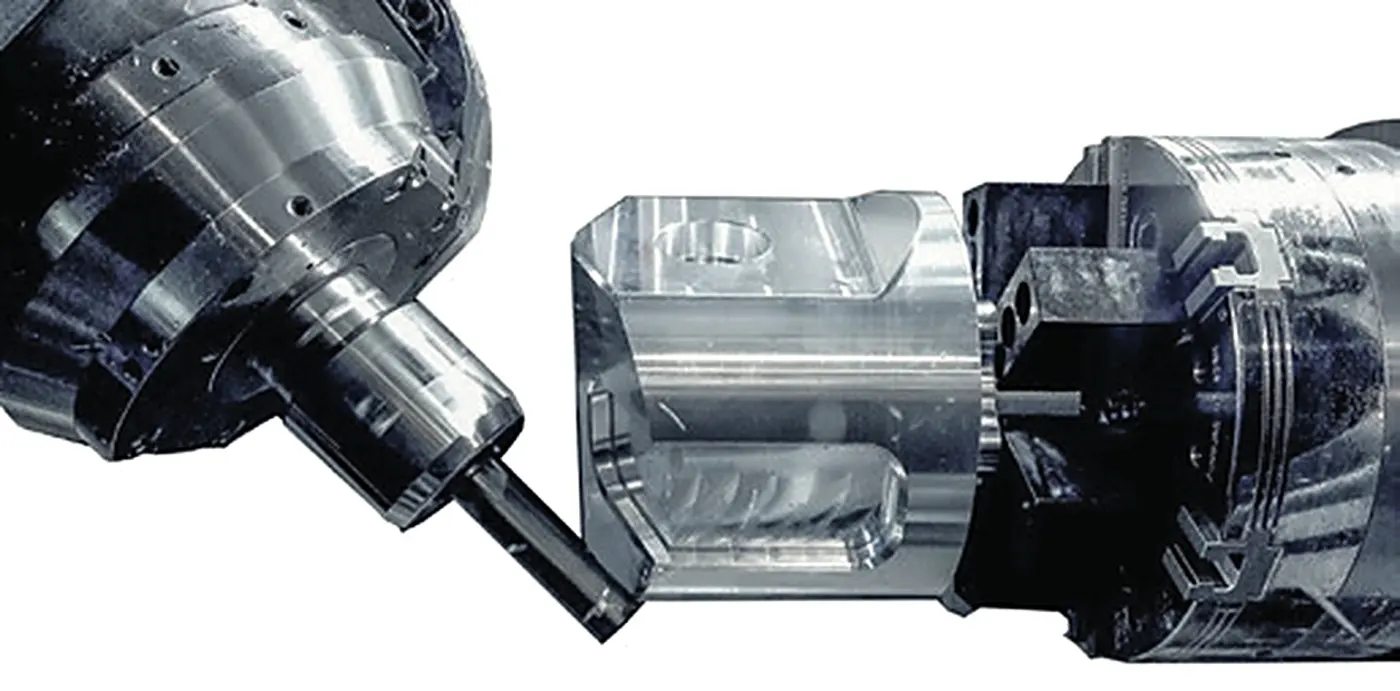
We do simultaneous 5-axis milling for parts that 3-axis and 3+2 machining can't reach well: airfoils, impellers, blisks, ports, undercuts and compound angles. Every program is simulated before it runs.
Short answer: JEP Manufacturing offers simultaneous 5-axis CNC milling on a Kitamura HX500 horizontal machining center (Ø31.5 in × 43.5 in envelope). We use it for airfoils, impellers, blisks and multi-face parts in Inconel, titanium, stainless and aluminum, from prototype to production.
Parts we run on 5-axis
- Blisks, impellers and inducers
- Turbine blades, vanes and other airfoils
- Valve bodies, manifolds and blocks with angled ports
- Aerospace and defense brackets and housings machined on several faces
- Molds, dies and sculpted surfaces
- Parts that would need four or more setups on a 3-axis machine
| Kitamura HX500, 5-axis simultaneous | |
|---|---|
| Work envelope | Ø31.5 in × 43.5 in high |
| Travels X / Y / Z | 34.25 / 27.95 / 25.98 in |
| Configuration | Horizontal machining center, simultaneous 5-axis |
| CAM | ESPRIT EDGE with full machine simulation |
| Also 5-axis capable | Mori Seiki NT4200 DCG and NT1000 (B-axis milling head) · Kitamura HX400 (5-axis capable with rotary plates) |
Related: 9-axis mill-turn · Large part machining · Equipment list
Frequently asked questions
What is simultaneous 5-axis machining?
In simultaneous (continuous) 5-axis machining, the three linear axes and two rotary axes move together during the cut, so the tool can stay normal or tangent to a curved surface. 3+2 (positional) machining only tilts the part to a fixed angle and then cuts with three axes. Airfoils, impellers and blisks need simultaneous motion.
What 5-axis machines do you have?
Our main 5-axis machine is a Kitamura HX500 horizontal machining center with simultaneous 5-axis motion and a Ø31.5 in × 43.5 in work envelope (X/Y/Z travel 34.25 / 27.95 / 25.98 in). Our 9-axis Mori Seiki mill-turns add 5-axis milling with a B-axis head on turned parts.
What are the advantages of 5-axis machining?
Fewer setups, so features stay accurate relative to each other. Shorter, stiffer tools, giving better finishes and tighter tolerances. Undercuts and compound angles can be reached. Lead times are shorter because the part isn't re-fixtured several times.
Is 5-axis machining more expensive?
The machine hour costs more, but complex parts often cost less overall because setups, fixtures and handling are reduced. For simple prismatic parts, 3-axis is usually cheaper, and we will quote the process that makes sense.
Have a print or a STEP model?
Send it over. We review every RFQ by hand and include a lead time with every quote.